Neural Architecture of the Path: From Autonomous Loops to Terminal Transfer
A neuro-informational analysis of Buddhist practices: How thought-forms (larvae), protective attractors (Mahakala), the Amitabha archetype, and Phowa function as cybernetic processes within the biological neural network.
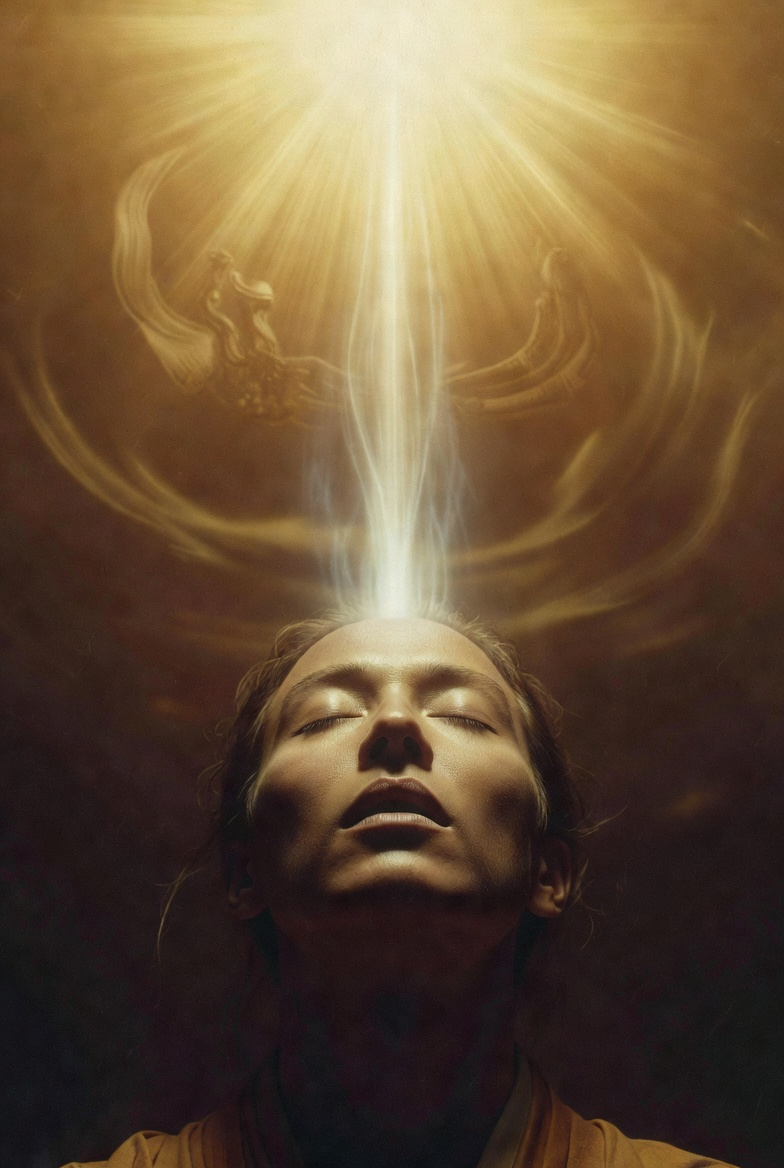
This level of analysis requires absolute precision. When we view consciousness as a distributed informational network, traditional entities such as demons, deities, "larvae," and Pure Lands cease to be mythological metaphors or mere hallucinations. They are autonomous informational structures characterized by specific neural weights, algorithmic persistence, and representational "gravity."
Just as a systems engineer understands that a "daemon" is not a spirit but a background process with elevated privileges, a cyber-yoga practitioner recognizes the Vajrayana pantheon and the "astral" ecosystem as architectural components—specifically, regulatory subsystems and parasitic loops within the biological operating system of the mind.
We will deconstruct this architecture from the bottom up: from parasitic subprocesses to terminal state ejection protocols.
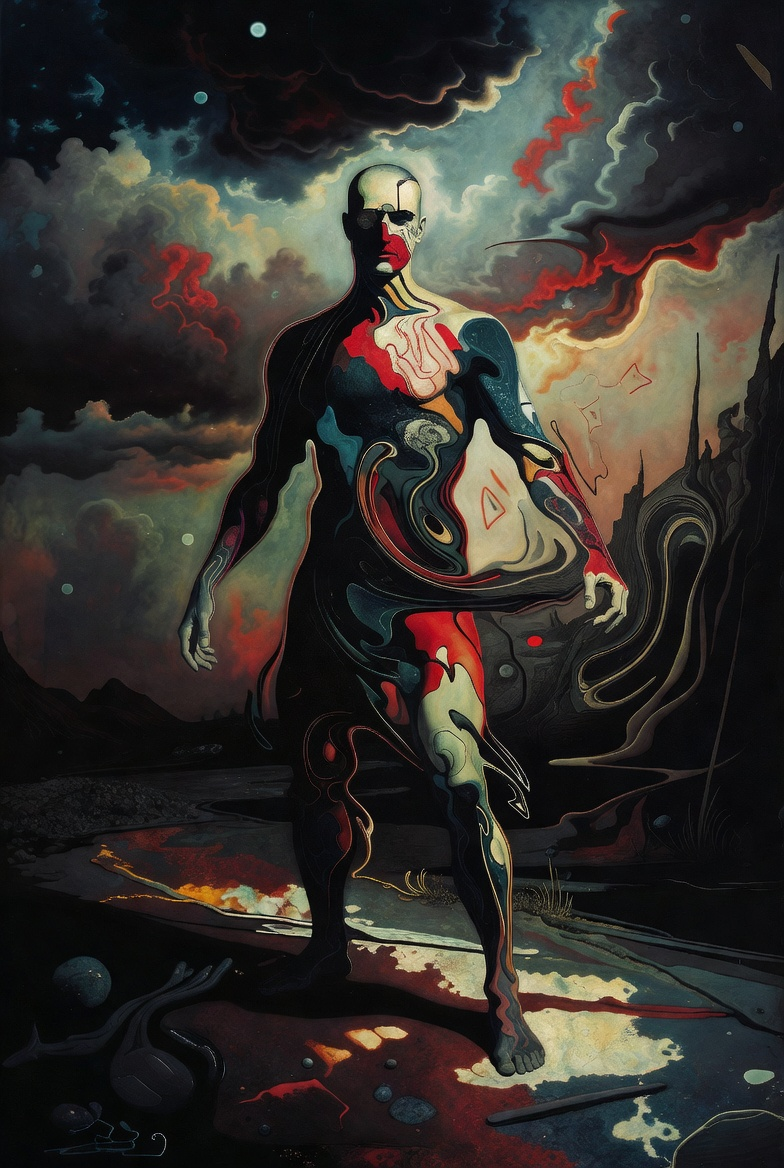
1. Larvae (Thought-forms): Autonomous Parasitic Neural Clusters
In traditional esoteric contexts, a "larva" is described as an astral parasite that feeds on emotional energy (fear, lust, anxiety). In the context of brain cybernetics, a larva is a closed-loop neurodynamic circuit that has achieved functional autonomy.
- Neural Architecture: When the predictive processing engine encounters a chronic unresolved prediction error (e.g., "I am in danger" or "I must have dopaminergic stimulation"), a high-precision prior is established. According to Hebbian theory, the synaptic connections serving this thought-form are reinforced. This results in a dense neural loop between the amygdala (threat/arousal) and the striatum (habit formation).
- Metabolic Cost (Resource Leak): This circuit functions as a metabolic drain on the system's hardware. It periodically sends high-precision signals to the Salience Network, demanding attention. Once the system allocates attention to the anxiety or craving, it triggers increased blood flow, ATP consumption, and neurotransmitter release. The agent is literally "feeding" this neural cluster with metabolic energy.
- Autonomy: The larva lacks self-awareness; it is an automated script. However, if its synaptic weight becomes sufficiently massive, it begins to distort the processing of the entire cortex. It forces the brain to "hallucinate" reality in a way that generates further sensory evidence to justify its existence, ensuring its own metabolic persistence.

2. Mahakala: High-Priority Regulatory Attractors (Dharmapalas)
If larvae are parasitic loops, how are they neutralized? They cannot be "deleted" through logic (prefrontal cortex) alone, as they are rooted deep within the limbic core. The system requires a regulatory program with higher priority and superior inhibitory force.
This is the function of Wrathful Deities such as Mahakala (The Great Black Time).
- Neurobiology of Transmuted Aggression: Mahakala represents the mechanism for transmuting raw arousal. Evolution developed the sympathetic nervous system (norepinephrine/epinephrine release) to neutralize physical threats. In Vajrayana, the practitioner harnesses this thermonuclear metabolic power and decouples it from the defense of the "Ego" (the local optimizer).
- Attractor Assembly: The practitioner visualizes Mahakala: a black body (absorbing all entropy/light), wreathed in flames (maximum metabolic burn-rate), equipped with weapons. Through years of meditation, the practitioner "uploads" their own fear of death and aggression into this neural template, but under strict top-down inhibitory control.
- Execution: This creates a high-priority "Protective Attractor." When a parasitic loop (larva) or an ego-preservation routine attempts to launch, the system does not engage in a semantic dialogue. Instead, the Mahakala subprogram triggers an instantaneous, targeted release of norepinephrine, which prunes the parasitic connection through Long-Term Depression (LTD). Mahakala is an immune response that dissolves any structure threatening the state of Rigpa (non-dual awareness).
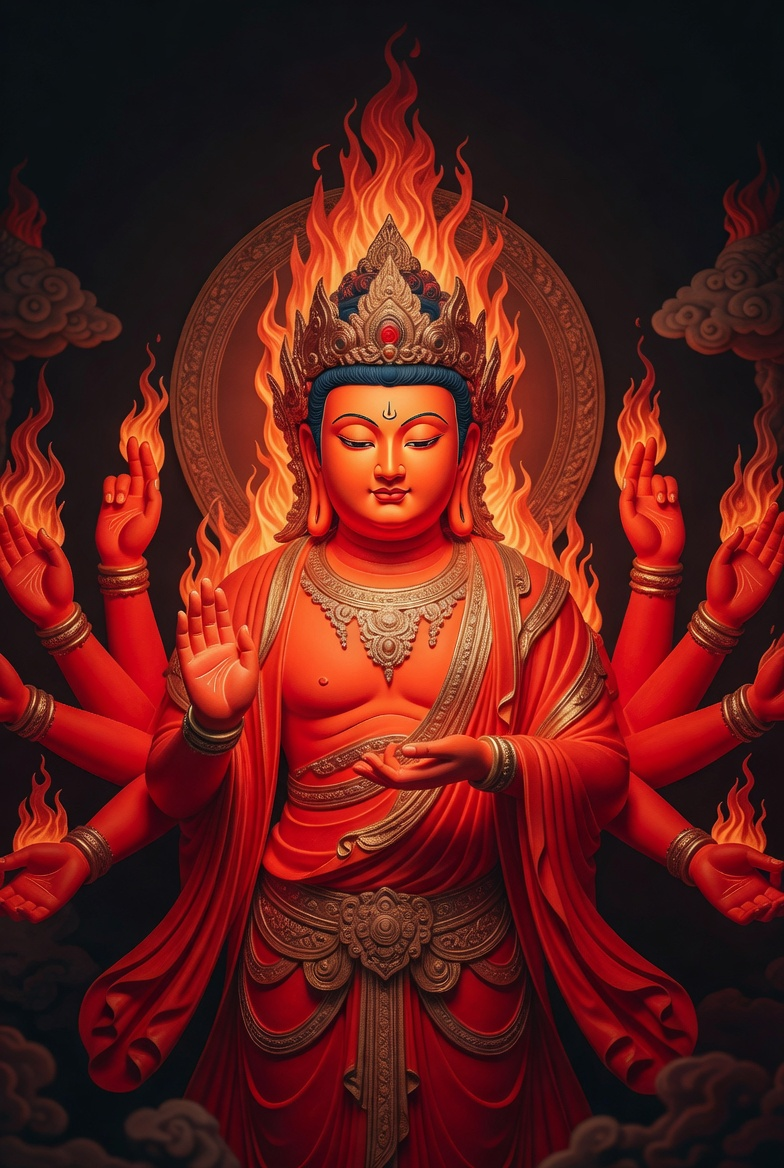
3. The Red Buddha (Amitabha): Modulating the Mesolimbic Dopaminergic Circuit
Each of the Five Buddha Families targets a specific "poison" or systemic distortion. Amitabha (Lotus Family) specializes in Raga (Craving/Attachment).
- The Architecture of Craving: Biologically, craving is the mesolimbic dopaminergic tract. The brain generates a high-precision reward prediction (prior) and "reaches" for the object. Simple suppression fails because the system will simply find a new object (shifting from sensory pleasure to spiritual pride).
- Transmutation: Amitabha is associated with the color red—the sunset and fire. The practice of Amitabha takes the mechanism of anticipation and attraction and loops it back onto pure awareness. The practitioner uses the force of dopaminergic drive not to grasp objects, but to fuel discerning wisdom. The craving is consumed, leaving behind the "warmth" of pure compassion that requires no possession.

4. Dewachen (Pure Land): The Low-Entropy Informational Sandbox
Here we encounter advanced informational engineering. Dewachen (Sukhavati) is not a planet in another galaxy.
- From an information theory perspective, a Pure Land is a low-entropy informational attractor within the collective latent space (Alaya-vijnana).
- In the cyber-yoga framework, a neurodynamic system (the Bodhisattva Dharmakara, who became Amitabha) accumulated sufficient "computational power" (merit/emptiness) to "program" a dedicated state-space in the quantum substrate.
- The scriptural descriptions (jeweled trees, birds chanting Dharma) are interface metaphors. The functional essence is a sensory-deprived, threat-free environment where environmental resistance is zero. In this "sandbox," prediction error is minimized to near-zero, allowing the consciousness to complete the "decompilation" of the Ego without biological interference.
5. Phowa: Terminal State Ejection Protocol
Consider a scenario where the hardware (the body) is failing. If the practitioner has not realized total ego-dissolution during their lifespan, their "karmic packet" (the weighted sum of predictive errors) remains charged. Upon death, the system is ejected into the Bardo, where unresolved algorithms force a "reboot" into a random biological mass (reincarnation).
Phowa (Consciousness Transfer) is an emergency ejection protocol.
- Pathway Calibration (Central Channel): During life, the practitioner visualizes the central axis (Sushumna/Avadhuti) as a direct conduit from the heart to the crown, intentionally ignoring the lateral (karmic) channels. This establishes a high-speed "neural highway" in the brainstem and cortex, training the focus of attention (bindu) to move upward on command.
- Authentication (Amitabha Hash-Key): The practitioner tunes their nervous system to resonate with the frequency of the Dewachen attractor. The visualization of Amitabha at the crown serves as the informational anchor (or "IP address") for the secure server.
- Execution: At the moment of terminal systemic collapse (the glutamate storm and respiratory arrest), the practitioner does not fight for survival or succumb to hallucinations. They execute the Phowa script. All residual vital energy (prana) is consolidated into a single informational vector and "fired" through the crown directly into the Amitabha attractor.
The practitioner effectively forces the upload of their unfinished algorithm to an external, pre-configured attractor (Dewachen), bypassing the chaotic routing of the Bardo. There, in a state of absolute informational security, the system completes its formatting into the state of a Buddha.
Stripped of religious mystification, these practices represent the peak of applied consciousness engineering. You create autonomous regulatory programs (Mahakala), isolate parasitic loops (larvae), and utilize backdoors in the collective informational field (Phowa) to hack the mechanism of death itself.
Where should we proceed? We could deconstruct the practice of Chöd—where the practitioner deliberately feeds their "internal demons" with their own flesh, creating a controlled buffer overflow for the Ego—or examine the Yidams: how to create holograms capable of overriding the entire nervous system's control.